SPREAD Updated 8 min read By TrustCedar Rate Desk
How a Personal Loan Rate Is Built
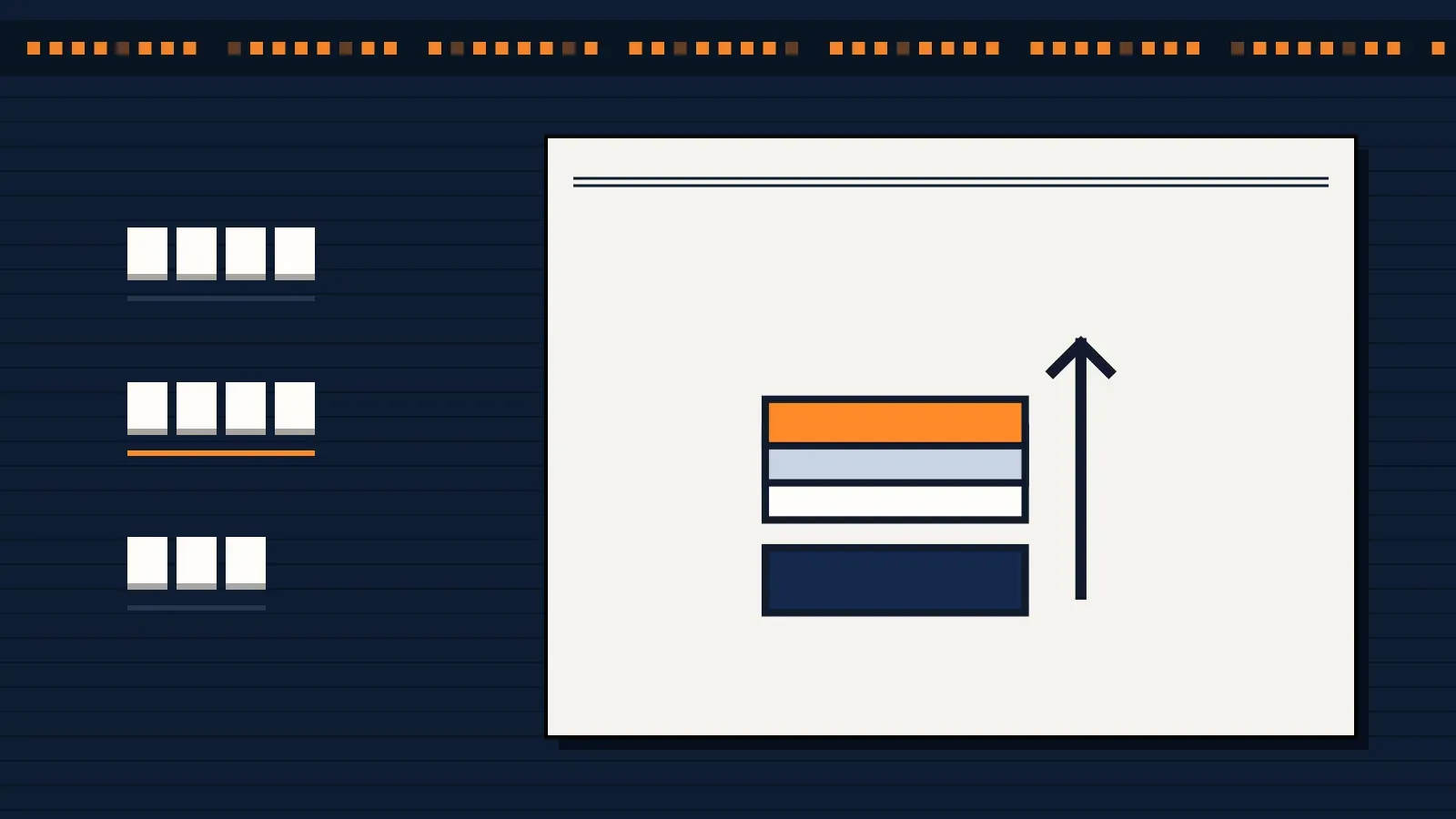
Your APR is a stack: what the money costs the lender, what it expects to lose, what it costs to run the loan, and a margin. The Fed touches only the bottom layer; your credit file sets most of the rest.
- Bank average, 24-month loan
- 11.90% APR (Q3 2026)
- Prime rate
- 7.00%
- Fed funds target
- 3.75%–4.00%
- The largest layer
- Your credit risk
The bottom line
A lender prices a personal loan from the bottom up: its own cost of funds, then the losses it expects from borrowers like you, its costs of making and servicing the loan, and a margin. Fees are folded into the APR. In the third quarter of 2026 the Federal Reserve's survey put the average 24-month personal loan APR at banks at 11.90%, almost five points above the 7.00% prime rate. Most of the gap between your offer and that average comes from your credit file, not from the Fed.
The four layers inside an APR
A personal loan is usually unsecured: nothing backs it but your promise to pay. So a lender has to cover more than its cost of money. It builds the rate in layers, and each layer moves for a different reason.
1. Cost of funds
What the lender pays for the money it lends: interest on deposits for a bank or credit union, or the rate investors charge an online lender. This layer follows the Fed's rate and Treasury yields.
2. Expected losses
Some borrowers will not repay. The lender estimates that share for applicants with your credit score, income and debts, and charges every borrower in that group enough to cover it.
3. Operating costs
Marketing, underwriting, servicing payments and collections. Some lenders charge part of this up front as an origination fee instead of in the rate.
4. Margin
The profit the lender wants, which competition keeps in check. Shopping several lenders is how you make this layer smaller.
The first layer is the one in the news. The second is usually the largest for a personal loan, and it is the one you can change most, by applying with a stronger credit file or a lower debt-to-income ratio.
Where the Fed's rate fits
The Federal Open Market Committee sets a target range for the federal funds rate, the rate banks charge each other for overnight loans. On October 28, 2026 it held that range at 3.75% to 4.00%, after raising it by a quarter point in September. Banks set their prime rate, the base for many variable-rate loans and credit cards, at the top of that range plus three points: 7.00% since the September move.
A fixed-rate personal loan does not move with prime once you sign. When you apply, though, the lender's cost of funds reflects where short-term rates are and where markets expect them to go over the next two to five years. Read what the Fed's rate does to your loan and how Treasury yields fit in.
What the averages show
The Federal Reserve's G.19 consumer credit release reports what commercial banks charge. The personal loan figure is a simple average of each surveyed bank's most common rate on a 24-month loan during the first week of the middle month of each quarter, stated as an APR under Regulation Z.
| Rate | 2024 | 2025 | Q3 2026 |
|---|---|---|---|
| 24-month personal loan | 12.27% | 11.50% | 11.90% |
| Credit card, accounts paying interest | 22.89% | 22.32% | 22.36% |
| 60-month new car loan | 8.16% | 7.65% | 7.54% |
Two things stand out. First, the personal loan average sits far above the prime rate, because of the risk and cost layers. Second, it sits far below the card rate, which is why a loan can make sense for paying off a card balance: see personal loan vs. credit card. Bank borrowers tend to have strong credit, so online lenders and finance companies often quote higher APRs to a wider range of applicants. More on reading these numbers in average personal loan rates.
How your credit file sets the spread
Lenders group applicants by risk and give each group its own price. The inputs differ by lender, but most look at the same things.
- Credit score and history: late payments, how long your accounts have been open and how much of your card limits you use.
- Income and its stability: what you earn, how long you have earned it and whether it can be verified.
- Debt-to-income ratio: monthly debt payments, including the new loan, compared with gross monthly income.
- The loan itself: a longer term or a larger amount usually carries a higher rate.
Federal rules give you two rights here. Under the Fair Credit Reporting Act, a lender that uses your credit report to give you worse terms than its best offers must send a risk-based pricing notice or a free credit score disclosure. Under the Equal Credit Opportunity Act, a lender that turns you down must tell you why, or tell you how to ask, within 30 days of your completed application.
How fees change the number you compare
An origination fee is often taken out of the loan before the money reaches you. You repay the full amount, but you received less, so the yearly cost of the money is higher than the interest rate. Regulation Z requires the APR on your disclosure to include required fees like this one, which is why the APR, not the rate, is the number to line up across offers of the same term.
A 36-month loan at a 12% interest rate with a 5% fee taken from the proceeds has an APR of about 15.6%. Two offers with the same APR and term cost the same, whatever the split between rate and fee.
Four ways to get a lower layer two
- Check your reports first. Errors in a credit report can push you into a costlier group; disputing them is free.
- Prequalify with several lenders. Most use a soft inquiry for a rate estimate, which does not affect your score.
- Borrow for the shortest term you can afford. Shorter terms usually price lower and always cost fewer dollars of interest.
- Compare APRs on the same day. Benchmarks move between meetings; offers taken weeks apart may not be comparable. Should you wait for rates to fall?
Sources
- Federal Reserve, G.19 Consumer Credit release, November 6, 2026
- Federal Reserve, FOMC statement, October 28, 2026
- Federal Reserve H.15, bank prime loan rate (FRED series DPRIME)
- Regulation Z, 12 CFR 1026.4: Finance charge (CFPB)
- Regulation V, 12 CFR 1022.72: Risk-based pricing notices (CFPB)
- Regulation B, 12 CFR 1002.9: Notifications of action taken (CFPB)
We checked the facts on this page against these sources on November 11, 2026. The four layers describe how lenders generally price risk; no lender's actual pricing is shown. Payment figures are worked examples from the standard amortization formula.
Reader questions
Does a Fed rate cut lower my existing personal loan rate?
Not if the loan has a fixed rate, which most personal loans do. A cut can lower the rates offered to new borrowers, and then refinancing may be worth a look.
Why is my offer higher than the bank average?
The average covers the most common rate at surveyed banks, whose borrowers tend to have strong credit. Your offer reflects your own credit file, income, debts, the term and the lender, plus any fee folded into the APR.
Is the rate on the rate board an offer I can get?
No. The board shows published benchmarks and averages with their dates. Only a lender, after reviewing your application, can tell you your APR.
Do credit unions price loans the same way?
The layers are the same, but a credit union is a nonprofit cooperative and federal credit unions face an interest rate ceiling set by their regulator. See personal loan vs. credit union PAL.
Put your loan on the board
Five quick answers and your contact details. TrustCedar passes the request to lenders and loan brokers; compare the APRs that come back against the rate board, and say no to any of them.
- 1 The amount, the purpose, your credit range, your timing and ZIP code.
- 2 Your name, phone, email and consent to be contacted.
- 3 A lender or loan broker may reply with an offer. No loan exists until you sign one.
You pay TrustCedar nothing. The lenders and loan brokers who contact you set their own rates, fees and terms, and decide on credit themselves. How we make money.
More from the desk
-
FFR Rate desk
The federal funds rate and your loan
The 2025–2026 path, how a move reaches cards and loans, and a quarter point in dollars.
-
AVG Rate desk
Average personal loan rates
The bank average since 2023, credit unions vs. banks, and how to read an average against your offer.
-
CARD Head to head
Personal loan vs. credit card
Half the average APR and a set end date, if the card stays empty: a worked $8,000 comparison.